The Role of Community Spaces in Building Confidence
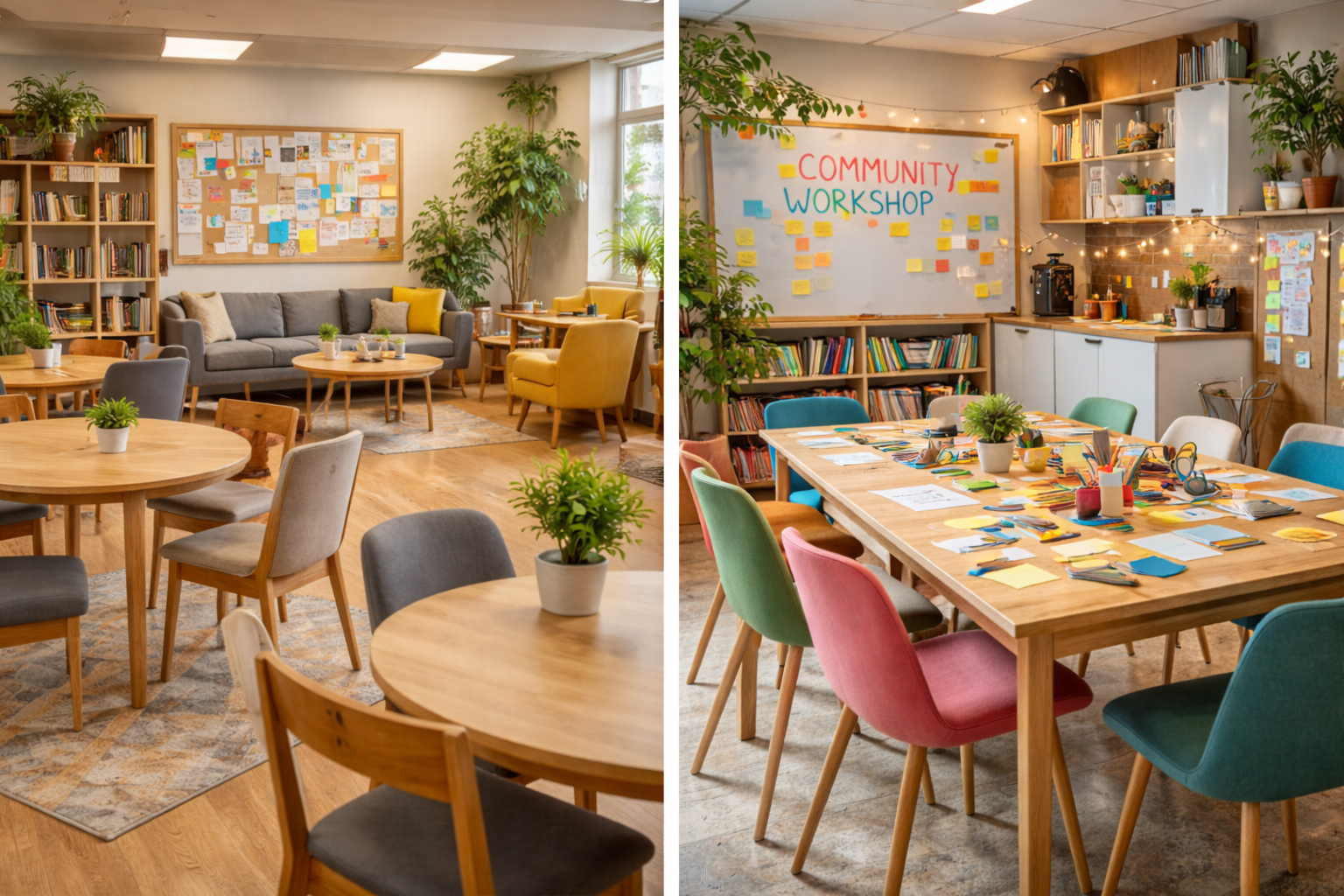
Confidence doesn’t usually start in classrooms, interview rooms or formal training settings.
More often, it starts somewhere much simpler.
It starts in spaces where people feel welcome.
Where there’s no pressure to perform.
Where people can turn up as they are, take part, and gradually find their feet.
Across communities, we see time and again that confidence grows through belonging, not instruction.
Why confidence comes before capability
Many people — especially young people and those who’ve felt excluded from traditional systems — already have ability. What they’re often missing isn’t skill, but belief.
Belief that they’re welcome.
Belief that they have something to contribute.
Belief that they’re allowed to try without fear of judgement.
Community spaces create the conditions for that belief to grow.
When someone attends a local event, workshop or activity and feels accepted, something subtle but powerful happens. They speak up a little more. They stay a little longer. They start to imagine themselves participating elsewhere too.
That’s confidence forming — quietly and naturally.
Community spaces remove pressure, not standards
There’s a common misconception that informal or community-led spaces lack structure or purpose. In reality, they often provide exactly the right balance.
Community spaces:
• Lower the pressure to “get it right”
• Encourage participation over performance
• Allow learning to happen socially and organically
• Build trust before expectation
This doesn’t mean standards disappear. It means people are supported before they’re assessed.
For many individuals, especially those who’ve had negative experiences with education or work, this is the difference between engagement and withdrawal.
Confidence grows through participation, not observation
One of the most powerful things community spaces offer is permission to participate.
Whether it’s helping set up an event, joining a creative activity, contributing ideas, or simply being present — participation builds confidence through doing.
People begin to see:
• “I can show up”
• “I can take part”
• “I can contribute”
• “I belong here”
These small experiences stack up. Over time, they shape how someone sees themselves — not just in the community, but in work, learning and life more broadly.
Why spaces matter as much as programmes
When we talk about employability, wellbeing or personal development, we often jump straight to programmes, courses and outcomes.
But without the right spaces, many people never reach those opportunities.
Community venues, shared spaces, halls, clubs and local hubs play a vital role in:
• Reducing isolation
• Building social confidence
• Creating informal learning environments
• Connecting people across generations and backgrounds
They act as stepping stones — places where people can rebuild trust in themselves and others before moving on to more structured pathways.
Our approach at Signature Community Events CIC
At Signature Community Events CIC, we believe community spaces are not an “extra” — they’re foundational.
Our focus is on creating inclusive, welcoming environments where people can:
• Connect with others
• Take part at their own pace
• Build confidence through real interaction
• Develop skills naturally through participation
We don’t start with job titles or qualifications.
We start with people.
By bringing communities together through events and activities, we create space for confidence to grow — often before individuals even realise it’s happening.
Looking ahead
As conversations continue around employability, wellbeing and inclusion, it’s vital we don’t overlook the quiet power of community spaces.
If we want people to feel confident stepping into work, learning or new opportunities, we need places where they can first feel confident simply being themselves.
Confidence starts in community.
And community starts with space.
